










Agentic AI systems demand enterprise-grade GPU infrastructure to scale reliably and securely. You must align hardware, data pipelines, and model architecture from day one. Skipping foundational steps risks cost overruns and system failure. You gain predictable performance and long-term adaptability by following proven deployment patterns tailored for production environments.
Key Takeaways:
- Enterprise-grade GPUs provide the computational power needed to train and deploy agentic AI systems at scale, enabling real-time decision-making and autonomous task execution across complex business environments.
- A structured five-step foundation-defining agent objectives, building secure data pipelines, selecting appropriate GPU infrastructure, implementing modular AI architectures, and establishing continuous learning loops-ensures reliable and expandable AI deployment.
- Scalability depends on tight integration between AI models and existing enterprise systems, requiring careful planning around latency, data governance, and workload distribution from the outset.
The Heavy Iron
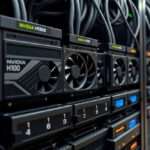
Your AI agents demand raw computational power, and only enterprise-grade GPUs deliver the performance density required for real-time decision-making at scale. These aren’t consumer chips-they’re engineered for 24/7 workloads, with error-correcting memory and multi-instance GPU partitioning that keeps agents running without degradation. You’ll need systems that support high-bandwidth interconnects like NVLink to minimize latency between agents and models.
Deploying on data center-class GPUs ensures thermal resilience and sustained clock speeds under load, preventing throttling during peak inference cycles. You’re not just buying hardware-you’re investing in predictable, auditable performance that aligns with SLAs. Without this foundation, even the most elegant agent logic will falter when production demands spike.
The Logic of the Agent
You design each agent to act autonomously based on real-time data, predefined goals, and dynamic environmental feedback. Unlike traditional scripts, these agents reason through decisions using models trained on enterprise-scale datasets, enabling them to adapt without constant human oversight. Their logic flows from observation to action in closed loops, making them ideal for complex, high-velocity operations.
Every agent evaluates multiple pathways before executing a task, weighing risks and outcomes with precision. This decision-making depth, powered by GPU-accelerated inference, allows agents to handle mission-critical workflows securely and at scale. You maintain control through governance layers, ensuring actions align with compliance and business rules-no rogue behavior, just reliable, intelligent execution.
The Flow of Data
Data moves from ingestion to processing at high velocity, and your architecture must handle real-time streams without bottlenecks. Enterprise-grade GPUs accelerate transformation, but only if pipelines are optimized for low-latency throughput. You need to define clear routing rules, validate inputs early, and monitor for anomalies before they propagate.
Structured and unstructured data coexist in agentic systems, and how you manage context determines model accuracy and agent reliability. A guide for leaders on implementing agentic solutions offers practical frameworks to align data flow with business logic, ensuring scalability without sacrificing governance.
Growing the Cluster
Scaling your infrastructure begins when demand exceeds current capacity. You must integrate additional enterprise-grade GPUs into your cluster without disrupting live operations. Hot-swappable hardware support and intelligent load balancing ensure continuous performance while minimizing downtime. This phase separates experimental setups from production-ready systems.
NVIDIA’s architecture enables you to expand compute density efficiently, maintaining low-latency communication across nodes. As you grow, consistency in firmware, drivers, and security protocols becomes the most dangerous oversight-if ignored, it risks system-wide failures. Transform Your Business With Agentic AI with a scalable foundation built for long-term intelligence evolution.
The Secure Machine
Your AI infrastructure must enforce zero-trust principles from the ground up. Every GPU node, container, and data stream requires continuous authentication and encryption, ensuring threats can’t propagate laterally. You’re not just protecting models-you’re safeguarding enterprise data at scale, where a single unsecured endpoint could expose sensitive workloads.
Hardware-rooted security like Trusted Execution Environments (TEEs) on enterprise GPUs gives you unmatched runtime protection against tampering and extraction. You maintain control over model integrity even in shared or hybrid cloud environments, turning each machine into a fortified, intelligent agent capable of autonomous, secure operations.

The Price of Action
You will face real costs when deploying agentic AI at scale, but enterprise-grade GPUs are non-negotiable for performance and reliability. Skimping on hardware leads to latency, failed inference, and system instability-risks that can derail entire AI initiatives. These investments aren’t just about processing power; they ensure your agents operate with the speed and precision your business demands.
Every dollar spent on high-performance infrastructure multiplies in value through uptime, accuracy, and scalability. Underpowered systems create hidden expenses-rework, downtime, and missed opportunities. By choosing the right GPUs now, you lock in a foundation that grows with your AI ambitions, turning cost into long-term advantage.

Conclusion
You now have the blueprint to build scalable agentic AI systems using enterprise-grade GPUs. Each of the five foundational steps-defining clear agent objectives, selecting appropriate GPU infrastructure, designing modular architectures, implementing secure data pipelines, and establishing performance feedback loops-positions your deployment for long-term success. These steps ensure your AI agents operate efficiently, adapt to growing demands, and integrate smoothly into existing workflows.
Your ability to execute depends on disciplined planning and technical precision. Focus on measurable outcomes, maintain strict governance over model behavior, and prioritize infrastructure stability from day one. With the right approach, your agentic AI system won’t just function-it will scale with confidence and consistency.
FAQ
Q: What are the first steps to building scalable Agentic AI with enterprise-grade GPUs?
A: Start by defining the scope of agent autonomy and the tasks they must perform. Identify whether the agents will operate in simulation, real-time control, or decision support environments. Choose enterprise-grade GPUs like NVIDIA A100 or H100 that support high-throughput parallel processing and large model training. Set up a containerized infrastructure using Kubernetes to manage GPU allocation, scaling, and fault tolerance. Ensure your data pipelines can feed consistent, low-latency inputs to the agents during training and inference.
Q: How do I ensure my Agentic AI system scales efficiently across multiple GPUs?
A: Design your AI architecture with distributed training in mind from the beginning. Use frameworks like PyTorch Distributed or TensorFlow MultiWorkerMirroredStrategy to split model workloads across GPU clusters. Implement model parallelism for large neural networks and data parallelism for high-volume training sets. Monitor GPU utilization, memory bandwidth, and inter-node communication using tools like NVIDIA DCGM or Prometheus with custom exporters. Optimize batch sizes and gradient synchronization to reduce idle time and maximize throughput as the system grows.
Q: What security and governance practices should be in place for enterprise Agentic AI?
A: Deploy role-based access control (RBAC) for GPU clusters and AI workflows to limit unauthorized access. Encrypt data at rest and in transit, especially when agents process sensitive enterprise information. Integrate audit logging so every agent action, model update, and GPU job is traceable. Use secure enclaves or confidential computing features available on modern GPU servers for high-risk operations. Regularly scan AI models and dependencies for vulnerabilities, and apply policy-driven guardrails to prevent agents from executing unsafe or out-of-scope actions.