










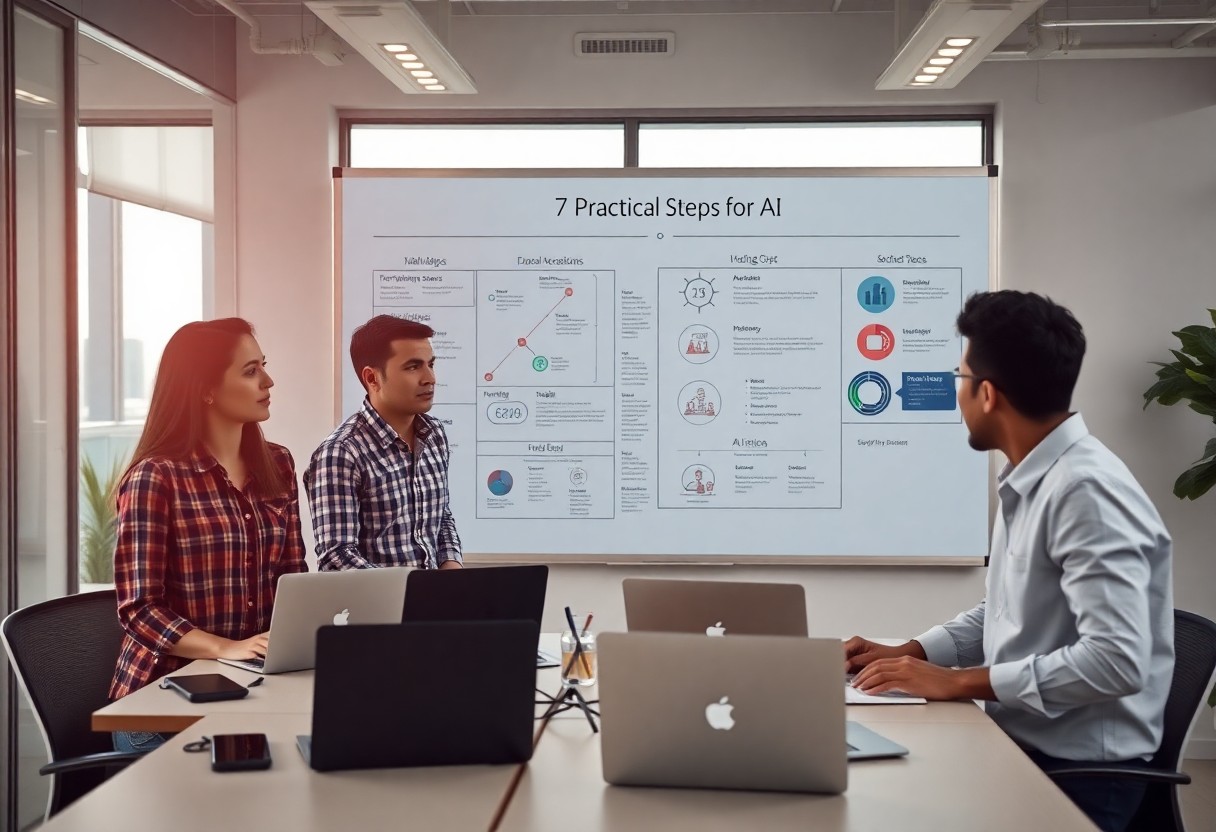
You possess the power to transform your enterprise by harnessing agentic AI workflows that enhance efficiency and productivity. In this post, you will explore seven practical steps that enable you to integrate intelligent systems seamlessly into your operations. By adopting these strategies, you can not only mitigate risks inherent in automation but also leverage technology to unlock unparalleled opportunities for growth and innovation. Understanding the interplay between human insight and machine learning is important in crafting a future where your enterprise can thrive.

Key Takeaways:
- Define clear objectives and outcomes to ensure alignment between AI capabilities and business goals.
- Integrate data management practices to enhance the quality and availability of information for AI processing.
- Foster a culture of collaboration among teams to facilitate seamless integration of AI into existing workflows.
Understanding Agentic AI
Agentic AI refers to systems capable of making autonomous decisions to perform tasks based on user input and environmental context. By leveraging advanced algorithms and machine learning, these systems act with a degree of independence, enhancing productivity and efficiency within enterprises. For further insights, consult A Practical Guide to Building Agentic AI Products.
Definition and Core Concepts
At its core, agentic AI embodies the idea of machines performing functions intelligently, mimicking human-like decision-making. This entails an understanding of various elements like autonomy, adaptability, and situational awareness. When you implement these systems, they become more than just tools-they evolve into partners within your workflows.
The Importance of Agency in AI
Agency in AI is significant because it enables systems to initiate actions based on complex data inputs rather than just executing pre-defined commands. This transformation paves the way for dynamic interactions, where AI can adapt to user needs and changing contexts. The result is enhanced responsiveness, ultimately improving operational workflows.
Consider how businesses are increasingly incorporating agency within AI to foster innovation and efficiency. For example, companies that deployed agentic systems reported up to a 30% reduction in decision-making time and a substantial decrease in human error rates. Such improvements not only optimize processes but also create an environment where your AI can suggest and execute solutions that align with your objectives, driving greater overall success.
Assessing Your Enterprise Needs
To effectively implement an agentic AI workflow, it’s vital to assess your enterprise’s unique needs. Begin by analyzing how current processes align with strategic goals, identifying potential bottlenecks and inefficiencies that AI can address. Assessing needs also requires considering employee feedback and exploring areas where automation could significantly enhance productivity or innovation.
Identifying Key Processes
Start by pinpointing the core processes that drive your enterprise’s success. Focus on tasks that consume substantial time but add minimal value. By identifying these key processes, you can prioritize which workflows will benefit most from an agentic AI intervention, thus optimizing resource allocation.
Evaluating Current Workflows
Once key processes are identified, evaluating your existing workflows is imperative. Look for performance metrics, employee experiences, and task duration data to gain insights into current efficiency levels. Analyze how well these workflows meet your organizational objectives and identify any gaps that might hinder performance. This holistic evaluation helps illustrate where agentic AI can bring meaningful improvements. For example, if customer inquiry resolution takes hours, automating this with AI could transform response times to mere minutes, elevating customer satisfaction while freeing up employee resources for higher-value tasks.
Designing the AI Workflow
Creating an effective AI workflow requires a systematic approach to ensure that your organization reaps maximum benefits from the technology. Each step should interconnect seamlessly to enhance productivity. You can find insightful examples and guidelines in Agentic AI: How It Works and 7 Real-World Use Cases.
Setting Clear Objectives
Establishing clearly defined objectives is the foundation of a successful AI workflow. Begin by identifying specific problems AI can solve within your organization. A well-defined goal, such as increasing customer satisfaction by 20%, enables focused resource allocation and performance measurement.
Integrating AI Tools
Integrating AI tools into your existing systems should be a seamless process. Examine your current technological landscape and determine how AI can enhance efficiency. For instance, pairing AI-driven analytics with customer relationship management software can reveal trends that improve decision-making.
Integrating AI tools requires careful planning, ensuring compatibility with existing systems while enhancing their functionality. Consider conducting a pilot program with a single department before scaling AI implementation organization-wide. This enables you to gather data on performance improvements, refine the integration process, and train your team effectively. Examples from businesses deploying machine learning models to optimize supply chains illustrate how targeted integration can yield significant operational improvements.
Implementation Strategies
To effectively implement an agentic AI workflow, start by clearly defining your objectives and metrics for success. Identify specific areas within your enterprise that can benefit from automation and autonomous decision-making, such as customer service or data analysis. You must prioritize integration with existing systems, ensuring seamless communication across platforms. Establish a timeline for deployment, allocate resources adequately, and engage stakeholders at every level to foster a collaborative environment. Tracking progress through data analytics will help you refine your approach and make necessary adjustments in real-time.
Change Management Considerations
Change management is fundamental to ensure the smooth adoption of agentic AI. You should proactively address potential resistance by communicating the benefits clearly and regularly. Engaging employees in the transformation process can mitigate anxiety and foster acceptance, while establishing a feedback loop allows you to address concerns as they arise. Setting clear expectations and involving team members in the design of the AI systems can drive a culture of innovation and adaptability.
Training and Onboarding
Effective training and onboarding are vital components of a successful agentic AI integration. Offering comprehensive programs tailored to various user levels will empower your workforce to leverage AI tools effectively. This involves not only standard operational training but also workshops focusing on the underlying principles of AI decision-making. Consider utilizing hands-on simulations and real-time case studies to enhance understanding, enabling your team to grasp both the capabilities and limitations of the AI systems.
Monitoring and Evaluation
Effective monitoring and evaluation of your Agentic AI workflow ensures it operates optimally and aligns with your enterprise goals. Regularly assess system performance, track outputs, and gauge user satisfaction to identify areas for improvement. Utilize tools and frameworks that facilitate real-time feedback. For an in-depth guide, check out How to Build a Robust Agentic AI System to enhance your strategy.
Key Performance Indicators
Establishing Key Performance Indicators (KPIs) is vital to measure the effectiveness of your AI systems. Focus on metrics like accuracy, speed, user engagement, and cost savings. These indicators provide tangible insights into how well your AI meets expectations and where adjustments might be necessary. Tracking these KPIs allows for informed decision-making that drives enterprise efficiency.
Continuous Improvement
Emphasizing continuous improvement in your Agentic AI workflow allows you to adapt and evolve alongside changing business landscapes. Regularly analyze performance data and solicit user feedback to identify shortcomings. Creating a feedback loop where your AI systems learn from their experiences helps enhance functionality and responsiveness. Investing time and resources in this cyclical process ultimately pays off, leading to greater organizational adaptability and efficiency.
Continuous improvement means iteratively refining your systems to enhance performance and align them with emerging needs. For instance, a leading enterprise discovered that analyzing user interaction data led to a 30% increase in user satisfaction by adjusting algorithms based on behavior patterns. Adopting a mindset focused on adaptive learning ensures that your AI continuously evolves, making it a crucial component of your business strategy. By staying attentive to performance metrics and user input, you’ll foster an environment where your AI thrives, enhancing both operational efficiency and user trust.
Case Studies and Best Practices
Examining real-world implementations of agentic AI workflows reveals actionable insights for enterprises aiming to enhance efficiency. These case studies provide a blueprint of successful strategies and tangible results.
- Company A: Achieved a 30% reduction in operational costs by automating customer service processes with AI chatbots.
- Company B: Increased sales by 25% through personalized marketing campaigns powered by machine learning algorithms.
- Company C: Streamlined supply chain logistics, resulting in a 40% improvement in delivery times.
- Company D: Enhanced decision-making speed by 50% by integrating AI-driven analytics tools.
Successful Implementations
By analyzing these examples, you can see how companies effectively leveraged agentic AI to drive efficiency. Each organization tailored its approach to fit unique challenges, demonstrating that customization is key. Ultimately, they reported significant improvements in productivity and customer satisfaction.
Lessons Learned
The journey to implementing agentic AI reveals valuable lessons that you can apply. A deep understanding of your specific business needs and continuous iteration ensures that AI tools align with operational goals, maximizing effectiveness.
In reflecting on these implementations, it becomes apparent that successful adaptation of agentic AI requires a focused approach. Engaging employees early in the process fosters acceptance and enhances the technology’s integration. Additionally, monitoring outcomes and refining strategies allows for scaling benefits across departments, demonstrating that continuous learning and adaptation are crucial to long-term success in enhancing your enterprise’s efficiency.
Summing up
To wrap up, by following the seven practical steps outlined, you can effectively construct an agentic AI workflow that enhances your enterprise efficiency. Engaging with these strategies empowers you to harness the potential of AI, streamline operations, and cultivate a culture of innovation. Your initiative in this endeavor could lead to transformative outcomes, reshaping not only your organization’s productivity but also its competitive stance in an ever-evolving landscape. Your journey towards AI integration is not merely a technological upgrade; it is a profound evolution in how you approach enterprise challenges.
FAQ
Q: What are the key components of an agentic AI workflow?
A: An agentic AI workflow typically consists of data integration, automated decision-making, continuous learning, collaboration tools, user interface design, performance monitoring, and feedback loops. These components work together to streamline processes and enhance efficiency within an enterprise.
Q: How can enterprises assess their current workflow to implement these steps?
A: Enterprises should start by conducting a comprehensive analysis of existing workflows, identifying bottlenecks, redundancies, and areas for improvement. This includes gathering employee feedback, analyzing performance metrics, and determining technology gaps that can be addressed through AI integration.
Q: What are the benefits of adopting an agentic AI workflow?
A: Adopting an agentic AI workflow enhances enterprise efficiency by reducing manual tasks, increasing process speed, improving decision accuracy, and facilitating better collaboration among teams. This can lead to cost savings, improved productivity, and enhanced customer satisfaction.